
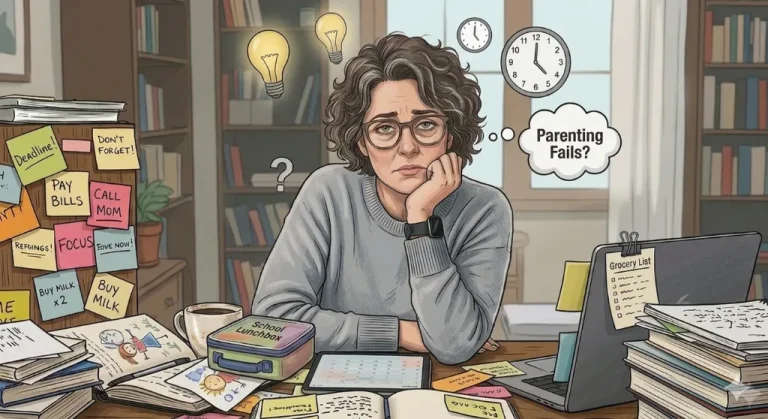
Why ADHD in Women is so Often Overlooked?
The answer to this question doesn’t have only one answer. The most common reason you will encounter on why ADHD diagnosis in women has been overlooked through decades is because it presents differently, symptoms often internalised and is masked socially. Women are more likely to have Type 2 ADHD, which is known as the “primarily inattentive type,” which has fewer of the obvious hyperactive symptoms, therefore is easier to overlook and harder to spot. But historically, ADHD research and diagnostic criteria were based on young boys with visible hyperactivity. A systematic bias in recognition is one of the most overlooked reasons, not the absense of of symptoms.
Many women with lived experience point towards symptoms worsening during puberty, and instead of receiving an ADHD assessment, symptoms are often attributed solely to hormones, blamed for having ”crazy hormones”. For that reason, misdiagnosis in women became extremely common with anxiety disorders, attention disorders, depression or mood disorders. Besides being frequently misdiagnosed, having their concerns dismissed, and experiencing symptoms much later in their lives, many women with ADHD are diagnosed in their 30s-50s, and often after experiencing serious burnout, parenting challenges, or career struggles. On top of that, social expectations of ‘holding everything together’ hid the struggle and increased the risk of mental health issues and difficulties.
How ADHD Presents Differently in Women
It’s commonly assumed that only hyperactive people can be diagnosed with Attention Deficit Hyperactivity Disorder (ADHD). In reality, research shows that girls and women with ADHD are just as likely as boys to experience impulsivity and hyperactivity. The difference isn’t that girls lack noticeable symptoms – it’s that these signs often go unrecognised. As a neurodevelopmental condition, it is classified into the following categories.
Inattentive and Internalised Signs
The inattentive subtype is sometimes called ADHD-I, and it’s the form most commonly seen in girls and women. Unlike the hyperactive-impulsive subtype, the inattentive symptoms are mostly internal and subtle, making them easy to overlook, and impact women to have low self-esteem.
Women may experience the following ADHD inattentive type symptoms:
- Struggles with focus on tasks that aren’t stimulating or immediately rewarding
- Difficulty sustaining attention at work, school, or household tasks, leading to incomplete projects or mistakes.
- Misplacing items, missing deadlines, forgetting appointments, or losing track of daily tasks.
- Challenges with time management, multitasking, or breaking tasks into steps.
- Being overwhelmed by responsibilities leading to procrastination
- Becoming easily distracted, spacey or daydreamy
- Slow processing or mental fatigue
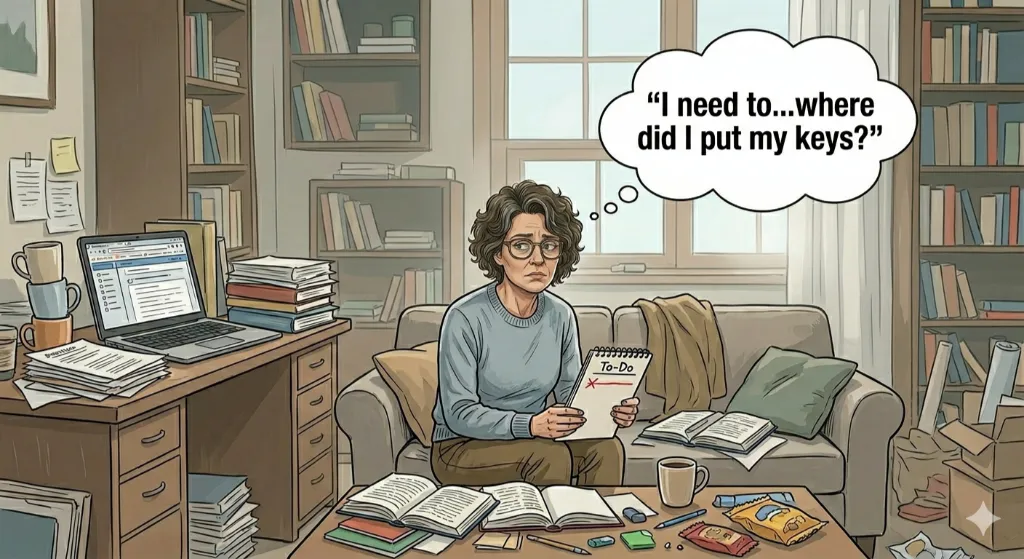
Women often mask or internalise symptoms, making ADHD less obvious. Internalised signs are emotional and cognitive rather than behavioural. Common ADHD symptoms and signs include:
- Frequent mood swings, irritability, or heightened emotional sensitivity
- Intense frustration over small mistakes or delays
- Blaming themselves for ”lazyness” or perceived failures
- A constant feeling of underachievement despite actual competence
- Chronic worry about forgetting or failing
- Feeling constantly “on edge” mentally, even if physically still
- May manifest as racing thoughts, daydreaming, or difficulty relaxing
- Over-preparing, double-checking work, or mimicking organisation as masking symptoms and social pressure
Subtle Hyperactivity and Emotional Symptoms
Subtle hyperactivity and emotional symptoms of Attention Deficit Hyperactivity Disorder (ADHD) in women often look very different from the stereotypical “can’t sit still” image. Many women describe a constant mental buzz: racing thoughts, overthinking, difficulty switching off, and a sense of inner urgency even when they appear calm on the outside. They may fidget in small ways (tapping fingers, playing with hair),talk quickly, interrupt without meaning to, or feel uncomfortable during still, quiet tasks. This kind of hyperactivity is easy to miss because it doesn’t disrupt others in the same visible way, but it can be just as exhausting.
Emotionally, ADHD in women is often intense and deeply felt. This can lead to people-pleasing, perfectionism, and a strong fear of failure. Another aspect is how these two areas overlap, and in everyday life, this might look like:
- Feeling mentally “on edge” even when physically still
- Replaying conversations and overanalysing interactions
- Struggling to relax without guilt or restlessness
- Experiencing strong emotional reactions that are hard to control
- Being seen as “too sensitive” or “overreactive”
- Burning out from trying to appear organised and composed
Masking and Coping Strategies
Masking in ADHD, for many women, feels like constantly compensating for the areas of life that ADHD symptoms makes genuinely difficult. Masking to conciously or unconciously hide symptoms to meet social expectations is unacceptable. Masking is not anymore hiding ADHD symptoms, bur working overtime to function.
Many women develop detailed systems to manage ADHD symptoms, such as strict routines, time-blocking, and external reminders. While these coping mechanisms can be powerful, they often come at the cost of exhaustion and burnout. The shift is moving from ”just coping” to intentionally building sustainable ways to manage ADHD – reducing daily friction, protecting women’s mental health, and allowing strengths to emerge without constant self-pressure.
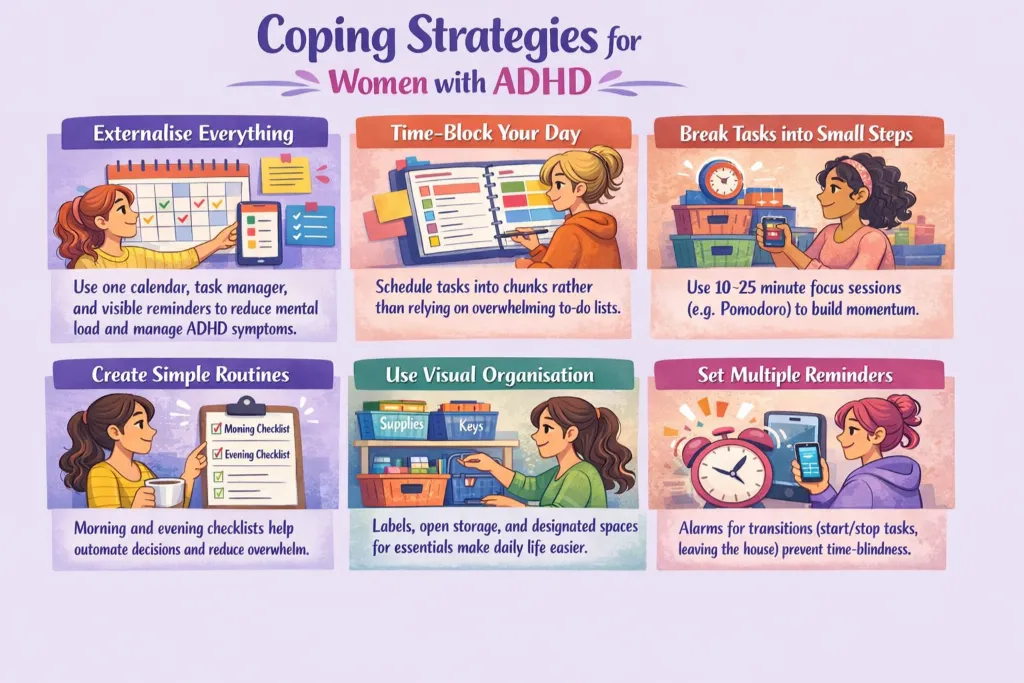
Practical strategies to manage ADHD and reduce masking:
- Externalise everything: Use one calendar, task manager, and visible reminders to reduce mental load and manage ADHD symptoms more effectively
- Time-block your day: Schedule tasks into chunks rather than relying on overwhelming to-do lists
- Break tasks into small steps: Use 10–25 minute focus sessions (e.g. Pomodoro) to build momentum
- Create simple routines: Morning and evening checklists help automate decisions and reduce overwhelm
- Use visual organisation: Labels, open storage, and designated spaces for essentials make daily life easier
- Set multiple reminders: Alarms for transitions (start/stop tasks, leaving the house) prevent time-blindness
- Plan buffer time: Add extra time to tasks and travel to reduce stress and rushing
- Develop coping mechanisms for emotional regulation: Name and validate feelings to reduce shame and improve regulation
- Use “if-then” plans: For example, “If I get distracted, then I reset a timer and return”
- Try to let go of perfectionism: Define “good enough” to avoid burnout and paralysis
- Reward progress, not perfection: Small rewards reinforce motivation and consistency
- Automate decisions where possible: Simplify meals, clothing, and routines to lower cognitive load
- Create an overwhelm plan: Have a go-to reset (2-minute task, breathing, short break) for difficult moments
You might be interested in learning more about Autism and ADHD in women and their growing recognition.
Key Signs and Symptoms of ADHD in Women
Before we discuss symptoms, it’s very important to state that experiecing them doesn’t automatically mean a woman has ADHD. For a behaviour to be linked to ADHD, it generally needs to meet several criteria:
- Lifelong pattern (Chronic ADHD): It has been present consistently since childhood.
- Functional disruption (Impairing): It significantly interferes with day-to-day life and activities.
- Intensity (Severe ADHD): The behavior is pronounced and noticeable.
- Widespread impact (Pervasive): It shows up across different settings and situations, not just occasionally.
Speaking of ADHD, symptoms in an ADHD diagnosis can easily lead to generalisation, since every person experiences different signs. Given the many lived experiences of women with high functioning ADHD, women can only speak from their own perspectives, so we will focus on the signs that have been most commonly experienced and shared:
- Procrastination
- Chronic disorganisation
- Clutter and trouble finishing tasks
- Frequent daydreaming
- High anxiety
- Difficulty relaxing
- Trouble sustaining focus
- Impulsivity (urge to act immediately, can’t wait turn, rush decisions)
- Strong emotional regulation challenges
- Sensititvity to criticism
- Hyperactivity
- Inner restlessness
- Forgetfullness and concentration problems
- Sleep problems
The Impact of Untreated ADHD in Women
Untreated, in many cases undiagnosed ADHD in women, makes nearly every life aspect unmanageable. As a woman ages, the lifestyle and unhealthy eating can make ADHD symptoms worse, and can frequently lead to an increased risk of anxety, substance misuse, eating disorders, relationship problems, burnout or feeling inedaquate in day-to-day life. When ADHD’s symptoms goes untreated for a long time, depression sets in, and this can take a heavy toll on self-esteem, and it’s one of the most damaging effects. Even when achievements are genuine and significant, they can feel like flukes, like you’ve somehow fooled everyone or that your success is meaningless.
Many adult women have shared on ADHD online forums and communities that they may hear comments from other people like: “Imagine how far you’d go if you really put your mind to it.”, “You’re intelligent, why is this so difficult for you?”, “Why aren’t you making more of an effort?”, “You have so much ability.. if only you could concentrate…”, or “What’s holding you back?.”
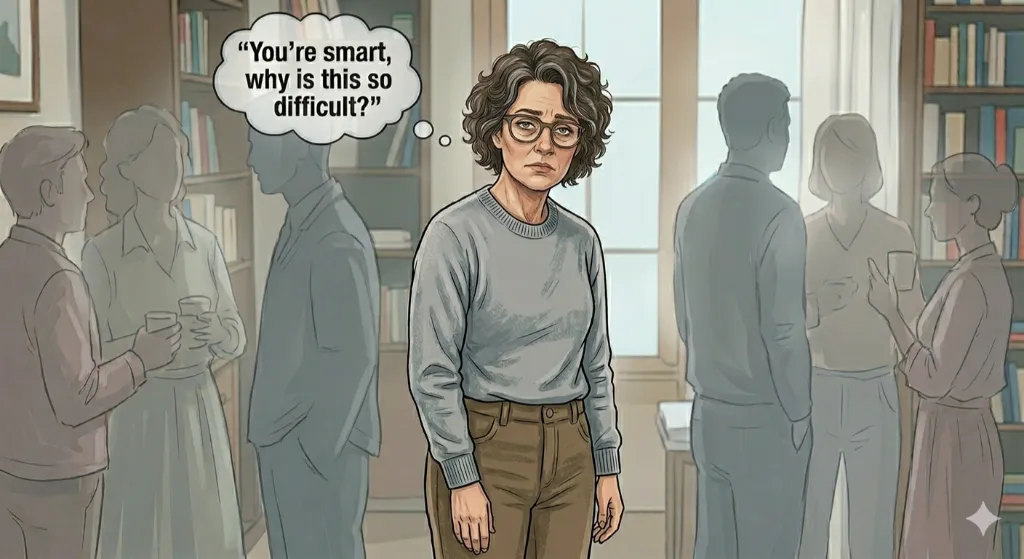
We came across this comment online, and it made us seriously rethink everything about diagnosing and misdiagnosing ADHD: ”It’s pretty isolating and demoralising. If you’re lucky, you’ll end up with a diagnosis eventually and start repairing your shattered life.”
Why ADHD in Women is Often Missed or Misdiagnosed
ADHD in women is frequently missed or misdiagnosed because it often looks different from the “classic” male pattern, is internalised and subtle, is hidden by coping strategies, and is mistaken for other conditions – all against a backdrop of historically male‑focused research and gender biases.
Traits likechronic forgetfulness, daydreaming or ”zoning out”, quielty struggling with organisation and time management, and emotional overwhelm and perfectionism don’t attract the same attention as disruptive behaviour, so they’re often missed, especially in school or clinical settings.
Treatment and Support Options for Women with ADHD
Adult women and young girls with suspected attention deficit hyperactivity disorder usually start by talking to a GP, who may refer them to a specialist for a full assessment. A healthcare provider, usually a psychologist or psychiatrist, can diagnose ADHD. In women, ADHD should be followed by a treatment plan once accurately diagnosed with ADHD. The plan should include:
- Ongoing specialist support
- Appropriate therapy (Cognitive behavioural therapy (CBT))and ADHD medications (when appropriate)
- Therapies for self-esteem, organisation, and emotional regulation
- ADHD skills-based coaching
- Healthy lifestyle and environmental adjustments
- Psychoeducation (learning about ADHD and how it affects your overall health
- Workplace or school support
Important: Not everyone chooses or benefits from medication; each treatment plan should be tailored individually.
ADHD Support with Unique Community Services
We provide humanised support for people with multiple needs in complex situations. With a proactive in-house therapy team using strength-based and trauma-informed models (PROACT-SCIPr-UK®, PACE, PERMA, Talking Mats), our care is focused in developing bespoke care plans developed with and about the supported person.
If you need a social care provider whose care and support feels compassionate, connected, co-produced and person-centred, Unique Community Services might be the right choice for you. Contact us now!
Offices in: Manchester and Leeds
FAQ
Can ADHD Develop Later in Life?
No, ADHD does not develop later in life in the sense of appearing suddenly in adulthood. So while ADHD itself doesn’t develop later, its recognition and diagnosis can happen at any age, and treatment and support can still be very effective in adulthood.
Why Do Some Women Only Realise They Have ADHD After Having Children?
Many women only realise they have ADHD after having children because the demands of parenting can amplify challenges that were previously manageable or unnoticed. In short, ADHD has always been present, but the demands of parenting act like a spotlight.
Can ADHD in Women be Mistaken for Personality Traits?
Yes. ADHD in women is frequently mistaken for personality traits because symptoms like inattentiveness, disorganisation, emotional sensitivity, or perfectionism can be misinterpreted as character flaws rather than signs of a neurodevelopmental condition. Also, because they often present differently than in men and can be subtle or internalised.
Do Women with ADHD Struggle More with Perfectionism?
Yes. Women with ADHD often struggle more with perfectionism because they try to compensate for difficulties with attention, organisation, and memory. This can lead them to set unrealistically high standards for themselves, overwork, and experience intense self-criticism, which can worsen low self-esteem and stress
