Why Understanding Autistic Needs is Essential?
Like every other child, children with autism have their own unique needs. But regardless of the background, they all need the same, essential thing: understanding. When a child feels understood, it can lay the foundation for a trusted, strong relationship.
When you establish a contact, the connection builds, and with it the opportunity to positively influence, direct and guide their future development. This developmental perspective moves us away from the deficit-based model, which focuses on what a child ‘cannot do’, towards a strengths-based approach that champions what they CAN DO.
By recognising and meeting an autistic child’s needs, we empower children to build resilience and strengths and to live a meaningful life in the community. Whether by adapting a physical environment to reduce sensory overload or using specific communication tools like PECS (Picture Exchange Communication System), understanding these needs is key to improving quality of life and fostering genuine independence.
When parents and other family members, caregivers, and support teams fully grasp a child’s sensory, emotional, and developmental requirements, they can prevent the distress that often leads to what is labelled as “behaviour that challenges“. In reality, such behaviour is simply a form of communication from a child whose needs are unmet.
Key Needs of Autistic Children
Every child is unique, so are their needs. However, children with autism often have diverse and distinct ways of functioning from their neurotypical peers. Research data highlights several core categories that require attention, empathy, and the right support to truly understand the key needs of an autistic child.
Developmental Needs
Developmental needs refer to the milestones and skills a child acquires as they grow. For children with autism, these trajectories may vary significantly because they develop at their own pace, with strengths and challenges that require tailored support. Some may excel in areas like mathematics or visual thinking, while needing extra support with language or motor skills.
What are the primary developmental areas requiring support?
The first step is to recognise the child’s unique developmental milestones. This understanding will facilitate the entire process, making each stage more focused and purposeful.
- Communication skills.
Sometimes, children with autism prefer non-speaking and alternative forms of communication. They need support in developing methods that work for them, such as using multimedia and digital aids, sign language, or visual cues, schedules and boards, rather than being forced to rely on standard verbal communication. - Cognitive processing.
Children with autism often grasp information differently. This may involve a step-by-step process or visual presentations to fully explain the new concepts. - Adaptive skills.
These are the practical, everyday skills needed for independence, such as dressing, feeding, and personal care. Again, it is about adapting to the child’s own pace, one step at a time.
By using a child’s unique interests, such as trains, dinosaurs, or art, educators and therapists can make learning engaging and meaningful, helping the child connect new skills and information to their passions and build confidence in their abilities.
Physical and Sensory Needs
Sensory processing is often one of the most significant areas of need. A child may be hypersensitive (over-responsive) or hyposensitive (under-responsive) to sensory input, including sights, sounds, textures, balance and movement.
How do sensory differences manifest?
- Visual and auditory sensitivity.
Bright lights, flickering screens, or loud, unpredictable noises can cause physical pain, discomfort or even anxiety. Identify whether one of these factors is causing your child’s distress and adapt the routines accordingly. For example, offering a low-arousal environment with dimmable lighting and a quiet room to retreat to. - Proprioceptive and vestibular needs.
These senses relate to body position and balance. Some children seek deep pressure, such as weighted blankets, or rhythmic movement, like rocking and spinning, to feel regulated and grounded in their bodies. These repeated movements are also known as “stimming“. Trying to suppress stimming could have a negative impact, leading to increased anxiety or negative mental health outcomes. Instead, creating supportive environments that respect these behaviours promotes inclusion and wellbeing. - Tactile defensiveness.
For children with autism, certain textures in clothing or food can cause discomfort. Once you understand the triggers that might cause your child distress, you can implement various sensory-regulation strategies.
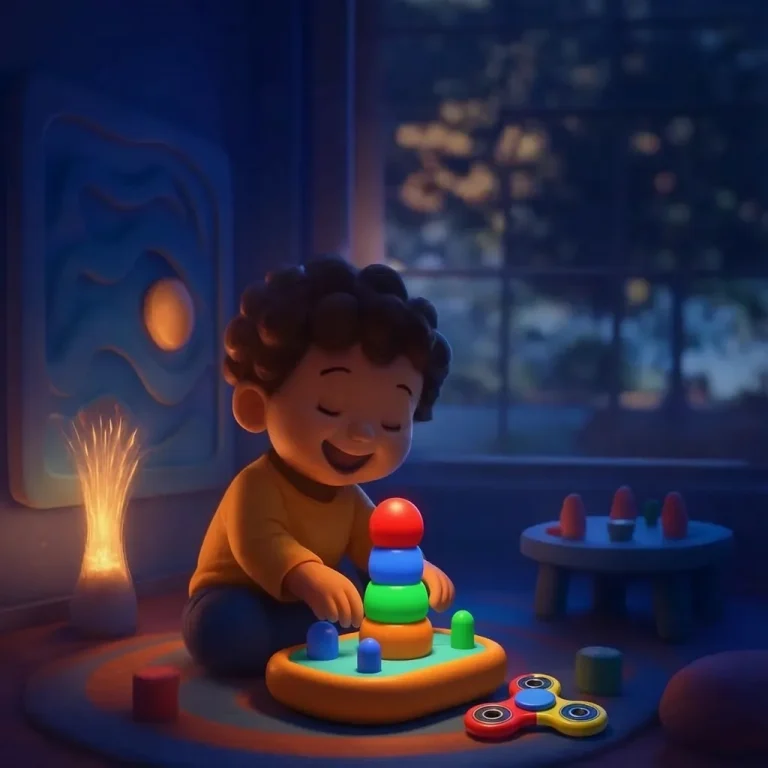
Sensory integration therapy helps children respond to sensory input in adaptive ways. What’s more, autistic people, regardless of age, enjoy activities such as trampolining, swimming, or playing with different textures, which provide balance and regulation. Also, using devices like lava lamps and noise-cancelling headphones can help children feel more comfortable and in control.
Structure and Consistency
Sometimes, the world may feel chaotic and unpredictable to a child with autism. This is often due to the need for order and predictability, which reduces anxiety and creates a safe framework for learning and living.
Why is structure so important?
- Routine creates safety.
Knowing precisely what will happen next reduces the cognitive load and fear of the unknown. This allows the child to focus their energy on learning and playing rather than worrying. - Visual schedules.
Using visual timelines such as “now and next” or “first/next” boards helps children anticipate what will happen next. It provides a concrete reference point for their day. - Preparation for change.
When routines must change, autistic children need advance warning and explanation, often conveyed through social stories (written, drawn, or digitally enhanced as multimedia tools).
The sense of consistency is not about rigid rules but about creating a supportive framework with a predictable schedule that respects the child’s need for order and helps them feel safe and secure.
Emotional and Behavioural Needs
Every child learns to regulate emotions at their own pace. Building an emotional regulation system requires structured and balanced guidance from the earliest age. Every child finds their own way in managing their emotions, but children with autism sometimes experience emotions more intensely and face bigger challenges in identifying or expressing them clearly. That’s why it’s important to recognise and embrace their own way of dealing with strong emotions, providing understanding, empathy and support in every situation, unconditionally.

How can we provide emotional support?
- Co-regulation.
To balance our child’s emotions, we first need to recognise the emotion and provide comfort and reassurance in the most vulnerable moments. In that way, the child learns that meeting their needs can be done calmly. - Understanding “behaviour as communication”.
Every behaviour is a form of communication. If a child exhibits behaviour, it’s only a reflection of their internal state. We understand behaviours that challenge as a sign of distress, pain, or sensory overload. There’s no need for reaction, other than showing empathy while also analysing the root cause. - Safe spaces.
A designated “safe zone” where a child can go for emotional self-regulation when they feel overwhelmed. This place should reflect a sense of order, peace, and tranquillity, required for the effective soothing of their previous distressed state. - Teaching calming strategies.
Deep breathing, counting to ten, or tracing the outline of their hand can also help children manage emotional escalation.
Social Interaction Needs
Social interaction needs for children with autism are often misunderstood. It is not that they don’t want to connect – it’s that the standard “rules” of interaction, including reading of body language like eye contact, facial expressions and nonverbal cues, seem confusing or exhausting to them. And vice versa, neurotypical people also find it hard to read the emotions of autistic people. This phenomenon is known as the “double empathy problem“.
How to support an autistic child’s interaction and improve their social skills?
- Parallel play.
They can feel worried in every new social situation, even during a simple game. Respect that a child may prefer to play alongside others rather than directly with them. - Role playing.
Engaging in fictional scenarios, such as joining a playgroup game or starting a conversation, can help children gain confidence and learn to navigate social interactions. - Understanding and acceptance.
Probably the most crucial part is to allow children to socialise in their own way, whether that’s talking passionately about a special interest or simply sharing a joint space in silence. Neurotypical approaches like forcing eye contact or starting small talk can only cause backlash.
Medical and Therapeutic Needs
Many children with autism have additional medical or therapeutic requirements, which may include co-occurring conditions such as epilepsy, gastrointestinal issues, or sleep disorders.
Which professional care teams are commonly needed?
- Multidisciplinary team.
Here at Unique Community Services, we use a Therapy Team Lead, a PBS Practitioner, a PROACT-SCIPr-UK® instructor, and an Occupational Therapist who work together to create a holistic support plan. - Clinical team.
Managing medical needs requires professionals trained to support people with multiple needs in complex situations. For example, a child with avoidant/restrictive food intake disorder (ARFID) might work with a dietitian and a psychologist to develop a feeding plan that respects the sensory preferences and nutritional needs. - Mental health support.
Anxiety and depression are common among autistic people. What they need is proactive mental health support, such as Cognitive Behaviour Therapy (CBT) and Positive Behaviour Support (PBS), that validates their experiences, focuses on the child’s strengths, and provides positive reinforcement to build on them.
Love and Acceptance
We left the most fundamental need for the end. Unconditional love and acceptance are of utmost importance. For instance, if a child loves trains, it might be encouraged to share their passion with others, or if a child prefers quiet activities, it might be given the space to enjoy their interests without pressure.

What does true acceptance involve?
- Celebrating neurodiversity.
Celebrating the child’s strengths, such as their honesty, attention to detail, or unique perspective, builds self-esteem. - Listening to autistic voices.
Respecting the child’s autonomy and choices. Their preferences, even if they are non-speaking and communicate through body language or tools, must be honoured. - Emotional safety.
Creating an environment where the child does not have to mask and hide their autistic traits to be accepted. They need to know they are loved just the way they are.
How Caregivers and Parents Can Best Support Autistic Children
Supporting a child with autism requires a shift in perspective and a commitment to continuous learning. It is about building a partnership with the child and their wider support needs network.
What are the most effective support strategies?
- SEND support.
Parents and caregivers should contact the SEN co-ordinator (SENCO) in their child’s school or nursery to request a Special Educational Needs and Disabilities (SEND) assessment. This assessment can lead to an Education, Health and Care (EHC) plan for children and young people with more complex needs, ensuring they receive tailored support both at home and in educational settings. This may include Learning Support Assistants (LSAs), specialist classrooms, etc. - Person-centred care.
Care is designed around the child, not the diagnosis. Every strategy should be tailored to their specific personality, likes, and dislikes. - Positive Behaviour Support (PBS).
PBS is the gold standard in modern autism support. It focuses on improving quality of life and reducing behaviours that challenge by changing the environment and teaching new skills. It asks “What does this child need right now?” instead of “How do I stop this behaviour?” - Utilising multimedia and technology.
Technology could be the bridge, closing the gap in how different people approach each other and communicate: communication apps, eye-gazing technologies, or video-animated avatars explaining social stories.
Autism Support with Unique Community Services
Unique Community Services is a social care provider that puts the person at the heart of every decision.
What makes our approach unique?
- Proven expertise.
We supported Elliot, a young autistic man with learning disabilities. After spending four years in the hospital, due to having significant difficulties with communication, sensory processing, and emotional regulation, Eliot transitioned to supported living with our team. They worked closely with his family members to ensure a smooth and dignified move, creating a bespoke PBS and care plan, while fostering his autonomy. We focused on reducing behaviours that challenge, improving communication, and helping Elliot engage with the world around him.
“Having Unique Community Services by our side has made all the difference. For the first time, Elliot feels safe, understood, and truly part of our family again.” – Christine, Elliot’s mother. - Dedicated clinical and support teams.
Our support workers are not just carers. They are highly trained professionals working alongside our clinical and multidisciplinary teams to ensure every aspect of a child’s wellbeing is covered. - 24/7 clinical care.
We provide round-the-clock support for people with multiple needs in complex situations. Whether it is managing medical devices or providing emotional support through the night, our teams are at your disposal.
If you’re looking for a provider who recognises your child’s strengths and potential and offers expert, compassionate, and person-centred support, our offices in Manchester and Leeds are here to help.