

What Is Compassion Fatigue?
Compassion fatigue is the emotional, physical and psychological exhaustion that comes from prolonged exposure to other people’s emotional pain and suffering. The Journal of Health Service Psychology describes compassion fatigue as “the extreme stress and burnout from helping others” and notes that it can be harmful to professional wellbeing, especially when there is a lack of awareness, education, prevention and support around it. It is caring so much and for so long, without enough recovery and your own self-care, that your system shuts down to protect you. Compassion fatigue is often described as a combination of burnout (chronic workplace stress and depletion) and secondary traumatic stress (trauma exposure), and it commonly affects healthcare workers, mental health professionals, social workers, caregivers, therapists, and even family members.
Common lived-experiences quotes include: ”I stopped feeling everything”; ”I know I should care, but I just don’t anymore”; ”I feel like a bad person for not caring”; ”I used to be compassionate… what happened to me?”. Feelings of emotional numbness, guilt, self-judgement, or irritability towards those they care for are constantly present during compassion fatigue.
Next, you should read more about our 7 tips for fighting compassion fatigue.
How Long Does Compassion Fatigue Last?
Compassion fatigue does not have one fixed timeline. It can last a few days, several weeks, several months, or longer, depending on how severe it is, whether the stressor is still ongoing, and whether the person gets real recovery time and support. There is one practical way of understanding through severity:
- Mild/Early stage – Often improves over days to a few weeks with rest, boundaries, support, and reduced emotional overload.
- Moderate – May last several weeks to a few months, especially if the person keeps working or providing care without adequate recovery.
- Severe/Chronic – Can last months or longer, particularly when it overlaps with burnout, secondary traumatic stress, depression, anxiety, or ongoing caregiving/trauma exposure.
- Unaddressed and ongoing – May not fully resolve while the person remains in the same high-stress situation without changes.
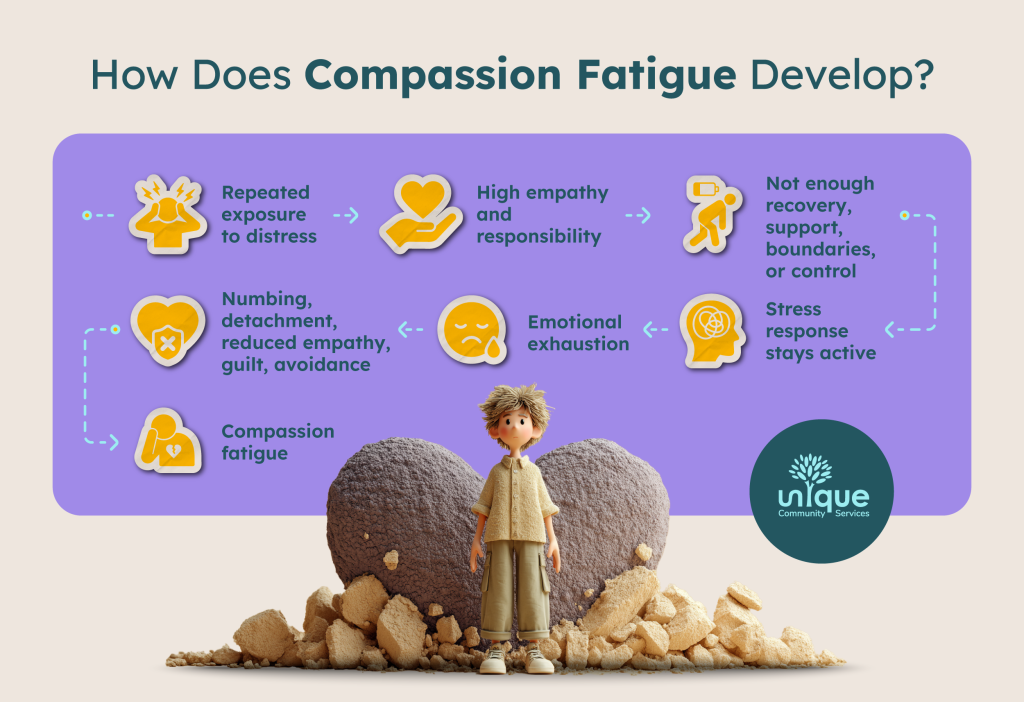
How Does Compassion Fatigue Develop?
The emotional cost of caring slowly but surely becomes a struggle, and it develops step by step:
- The person starts from empathy and responsibility.
- Exposure becomes repeated or prolonged
- The nervous system stays ”switched on”
- Emotional resources become depleted
- Burnout and compassion fatigue can overlap
Signs of Compassion Fatigue
Compassion fatigue can show up emotionally, mentally, physically, and behaviourally. The main pattern is: you still care, but your body and mind start reacting as if they have no capacity left to keep absorbing other people’s distress. There are emotional, mental and cognitive, and behavioural signs that you, or someone you know or work with, might be developing compassion fatigue, including:
- Reduced empathy and sensitivity
- Emotional and mental exhaustion
- Irritability
- Increased anxiety and conflicts in personal life
- Difficulty concentrating
- Forgetfulness and brain fog
- Feeling overwhelmed by other people’s pain
- Feeling mentally overloaded
- Trouble making decisions
- Reduced sense of achievement
- Overwhelm and exhaustion from work’s excessive demands
- Detachment and numbness
Physical Symptoms of Compassion Fatigue
Compassion fatigue can also manifest in various physical symptoms. Common physical compassion fatigue symptoms include:
- Chronic fatigue and low energy levels
- Frequent headaches or migraines
- Muscle tension and pain
- Digestive issues, nausea, such as stomachaches or irritable bowel syndrome (IBS)
- Changes in appetite or weight
- Sleep disturbances like insomnia or excessive sleepiness
- Racing heart or chest tightness
- A weakened immune system leading to frequent illnesses
Causes of Compassion Fatigue
In the healthcare industry, it is not uncommon for individuals to experience a sense of emotional exhaustion and decreased empathy. The causes behind compassion fatigue are multifaceted and can be attributed to a combination of personal, professional, and environmental factors. Understanding these underlying causes is crucial in addressing and mitigating the impact of compassion fatigue on individuals and their ability to provide care and support to others.
What Causes Compassion Fatigue
Compassion fatigue is caused by caring deeply for others under emotionally demanding conditions for too long, without enough time or support to recover.
In the sector, it is not uncommon for health and social care professionals, including those working within mental health services (such as mental health providers), to experience emotional exhaustion and diminished empathy. Compassion fatigue arises from a combination of personal, professional, and environmental factors and may also affect compassion satisfaction. Understanding these underlying causes is crucial in addressing the impact of compassion fatigue on people and their ability to provide care and support to others.
There are several causes of compassion fatigue, including:
- Repeated exposure to other people’s suffering
- Vicarious trauma or current life stress
- Distress
- Illness
- Crisis
- Poor boundaries
- Heavy workload and organisational pressure
Compassion Fatigue vs Burnout
Compassion fatigue and burnout can look similar, but they do not come from exactly the same place. Compassion fatigue comes from absorbing other people’s pain. Burnout comes from being worn down by chronic pressure, demands, and poor recovery over an extended period due to occupational stress.
Both are confused because they can involve:
- Exhaustion
- Irritability
- Withdrawal
- Sleep disturbances
- Reduced motivation
- Negative thoughts
- Poorer psychological wellbeing
- Strained personal relationships
- Lower sense of personal accomplishment
Psychological Impact of Compassion Fatigue
Compassion fatigue can affect a person’s emotional health, thinking patterns, relationships, identity, and ability to care. It is not simply “being tired” or “having a bad week.” It is the psychological cost of repeated exposure to other people’s suffering, distress, illness, crisis, or trauma.
People experiencing compassion fatigue often work in professions that require high levels of empathy and care. The constant work can often negatively affect one’s mental health and psychological well-being, stemming from stressful situations. The symptoms appear as:
- Emotional numbness and detachment
- Emotional exhaustion
- Reduced empathy
- Anxiety, dread, and hypervigilance
- Low mood, hopelessness and depression-like symptoms
- Irritability and resentment
- Guilt and shame
- Loss of meaning and personal accomplishment
- Intrusive thoughts and trauma-like reactions from experienced trauma
- Social withdrawal and isolation
Can Compassion Fatigue be Prevented?
Yes, compassion fatigue can often be prevented or reduced, though it cannot always be fully avoided. The risk can be greatly reduced through self-awareness, boundaries, recovery time, support, and healthier working conditions.
A person can do many things “right” and still be affected by repeated exposure to suffering or trauma. But prevention can:
- reduce severity
- help someone recover faster
- prevent symptoms from becoming chronic
- protect empathy
- improve psychological well-being
- reduce the impact on personal relationships
- maintain a sense of personal accomplishment
- make it easier to ask for help early
Recovery and Prevention
Compassion fatigue can often be recovered from and prevented from worsening, but it usually requires more than simple self-care. Recovery depends on recognising the problem early, reducing emotional overload, getting support, and making practical changes to the work or caregiving environment.
The first step is self-awareness. Many people blame themselves for feeling numb, irritated, detached, or less empathetic, but these can be signs of emotional overload rather than personal failure. Helpful reflection questions include:
”Am I feeling emotionally numb or detached?” – Identifies reduced empathy early.
”Am I avoiding people who need support?” – Shows emotional overload.
”Am I more irritable than usual?” – Flags stress spillover.
”Am I carrying other people’s distress home?” – Shows poor emotional separation.
”Am I feeling guilty for needing rest?” – Highlights unhealthy responsibility.
Compassion fatigue affects body and mind and recovery is harder when both are depleted, with no coping strategies involved. Therefore, preventing compassion fatigue by making compassion sustainable before the person reached emotional shutdown, is very important step. How does prevention look like?
- Notice early warning signs (guilt about wanting space, withdrawal from personal relationships, dread before work or caregiving, emotional numbness, etc.)
- Build regular recovery into the routine and include proper breaks during shifts, protected days off, time away from caregiving, decompression after distressing conversations, hobbies unrelated to work or care, regular social connection, or supervision before things become overwhelming.
- Protect personal relationships by keeping some conversations unrelated to work or care, asking for practical help, or allowing yourself to receive support.
- Use workspace protections. Where compassion fatigue overlaps with burnout and occupational stress, organisations also have a responsibility. Workplaces can help prevent compassion fatigue by providing manageable workloads, regular supervision, reflective practice, access to counselling or occupational health services, and trauma-informed management.
- Develop a personal warning-and-response plan. When you feel numb or detached, speak to a supervisor, take recovery time, and reduce emotional exposure. When you become irritable, pause, rest, review your workload, and avoid overcommitting. Or, when you feel overwhelmed and hopeless, seek support by talking to a GP, therapist, occupational health professional, or another trusted professional.
Unique Community Services Prioritise Self-Care for Clinicians and Support Workers
At Unique Community Services, we prioritise self-care for clinicians and support workers, recognising that compassionate, high-quality care begins with a supported and emotionally healthy workforce. Through a culture that encourages reflection, open communication, professional boundaries, and regular wellbeing check-ins, the organisation helps staff manage the emotional demands of care work while reducing the risk of stress, burnout, and compassion fatigue.
Meet Paula.
We deliver our complex care services across the UK, with offices in Leeds and Manchester. Contact us today for information about our humanised work and services and how we can support your loved ones.
