
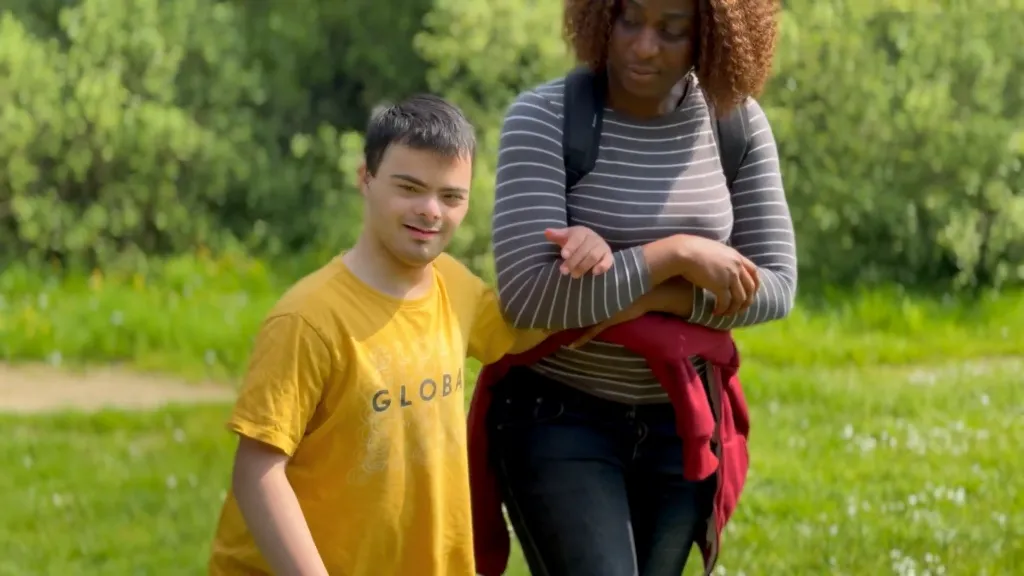
What changes when a person is given a way to be understood?
Sometimes, the change begins with a picture, a familiar routine, or a moment when someone pauses long enough to notice what another person is trying to communicate.
For Angel, these moments have created new possibilities.
Meet Angel
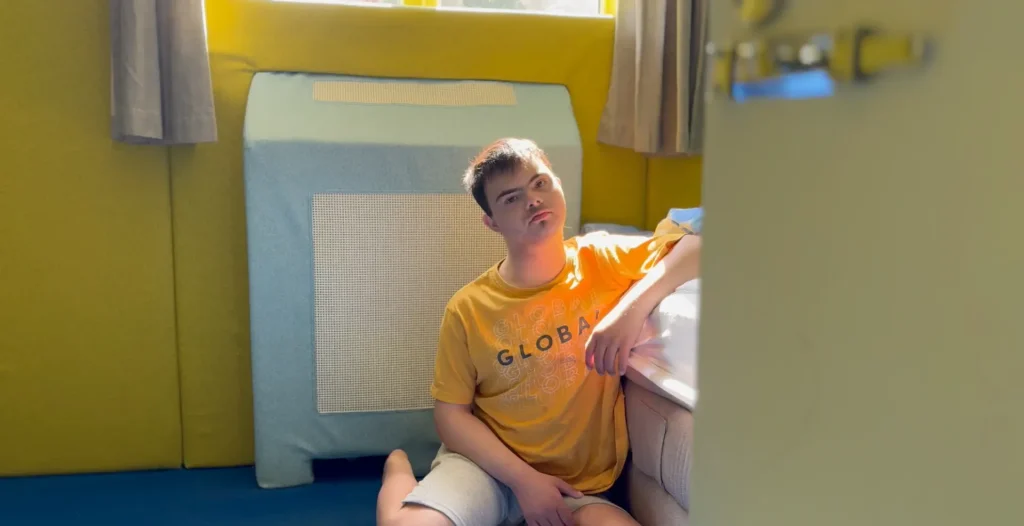
Angel is a young man living with Down syndrome, a heart condition and epilepsy. Like all of us, he has his own interests, preferences and ways of connecting with the world around him.
What matters to Angel: Daily walks, visiting his favourite playground, enjoying music sessions and relaxing in the swing chair in his garden.
Communication: Visual schedules, social stories, PECS and “Now and Then” pictures helped make information more accessible and supported Angel to express his choices.
The team around Angel: His family, support workers, school, Positive Behaviour Support specialists and speech and language therapist, who all contributed to a more consistent approach.
Enjoyment is closely connected to choice. Our care teams created the space for Angel to be fully himself, working alongside him to find the communication approaches that best supported him to express his thoughts, needs and preferences. And yet, this was only the beginning.
Building a Shared Language
Angel’s personalised care plan was shaped through close collaboration between Angel himself, his family, our support workers, and the multidisciplinary team.
Very early on, the PBS team provided strong support to our clinicians to help with positive ways of dealing with Angel’s behaviours of concern, and those behaviours quickly reduced in number and frequency until they were very few and far between. Even in the first month, the care team reported a huge reduction in the behaviours he was showing at school as well.
‘’I’ve seen a lot of improvement because when we started (supporting Angel), he wasn’t feeding himself, but now he does, he can pick and drink water when he wants to. He dresses himself up, so if he wants to change clothes, he goes to the wardrobe; he gives you the clothes he wants to wear, and you change him. Things were not like that before. And now the incidents have really reduced because we found out his way of communicating and now we understand him.’’ – Deborah Okoi-Obuli, Angel’s Support Worker.
Our Positive Behaviour Support specialists and a speech and language therapist worked together with Angel to tailor the plan. As a result, the team introduced proactive communication strategies such as visual schedules, social stories, and a Picture Exchange Communication System (PECS) to help Angel understand what was happening, prepare for what would come next, and express his own preferences. The strategies became part of Angel’s daily support.
Working Together and Following Through
Angel’s parents played an important role in shaping the approach. With their agreement, he began working with a speech and language specialist to introduce pictorial references, including “Now and Then” pictures.
This strategy helped make the present clearer and make what comes next more predictable and understandable. They also gave Angel another way to take part in decisions about his own day.
Consistency was essential. Angel’s support workers embraced the approach and began using it throughout their daily work. His family, school, and wider support team worked to communicate consistently and in a familiar way. This was not about expecting Angel to fit into an existing system, but about the people and environments around him becoming better equipped to listen, understand and respond in a way that worked for him.
When Choice Becomes Part of Everyday Life
As Angel’s communication became better understood, trust and mutual understanding grew between him and his support workers. His daily routines became more responsive to his wishes. The people supporting Angel could recognise what he wanted more clearly, while Angel felt reassured that his choices would be heard and acted upon.
It became obvious that confidence begins with knowing that your choices matter.
For Angel, these moments began opening the door to new opportunities. He showed a growing interest in outdoor activities, particularly walking and spending time in a park near his home. With accessible communication and consistent support, he could take a more active role in shaping his day.
Positive Outcomes
Independence is rarely one dramatic leap. More often, it is built through a series of moments in which a person is supported to choose, participate and try. The most important change happened when Angel’s voice consistently shaped the care he wanted.
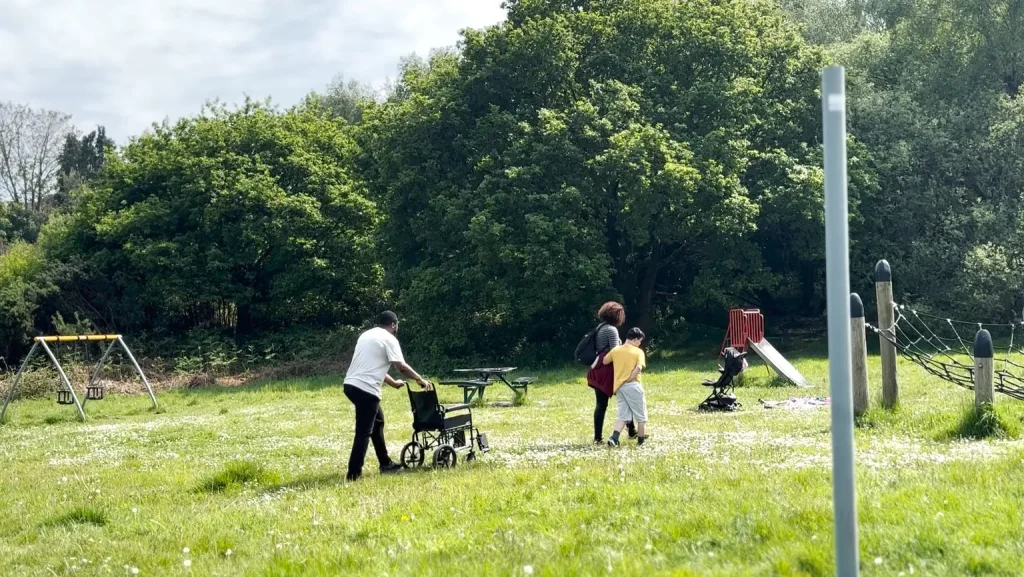
Angel’s communication improved significantly. His family, school, and support team noticed positive changes in how he expressed his needs and connected with others.
The positive outcomes include:
- Angel can communicate his needs, preferences and daily choices more clearly.
- Significant reduce of behaviours of concern in a short period, even when attending school.
- His family, school and support workers use a more consistent and accessible communication approach.
- Greater trust and mutual understanding have strengthened his relationships.
- Angel has more opportunities to influence his routines and participate in decisions about his day.
- His growing confidence supports greater participation and independence in everyday activities.
- He got a new wheelchair that helps him continue enjoying walks, playground visits and other activities in his community.
Today, the activities Angel enjoys carry a deeper meaning:
🌿 A walk turned into an expression of preference.
🪁 A playground visit turned into active community life.
🏞️ A picture turned into greater confidence and decision-making.
🏡 A moment in the garden turned into time chosen and enjoyed on his own terms.
One of the most meaningful developments in Angel’s journey is that his choices can now be heard and acted upon more consistently.
While it might seem like a journey about Angel learning new ways to communicate, the more significant narrative is that those around him learned to listen differently.
Angel’s care team:
- Established routines, a consistent environment, and accessible methods for recognising his preferences.
- They modified the surroundings instead of placing the burden of adaptation solely on Angel.
- By working together, they ensured communication didn’t rely on a single individual, location, or time.
‘’ Me and my wife can finally think about going on vacation for a week or two, without having to think about what is going to happen when we come back, what we will see at our time. We can trust them (support team), we can feel safe, and feel safe for Angel. – Chris Petrov, Angel’s father.
Redefining what complex care should feel like – compassionate, connected and genuinely unique. – Unique Community Services