

Sensory Needs in Community Support
Sensory needs are part of a person’s everyday life, wellbeing and ability to participate in their community. One person’s sensory experiences define how someone manages personal care, enjoys meals, communicates, travels, attends appointments or spends time with others. Sensory processing is the way the nervous system receives, organises and interprets information from the senses, enabling a person to respond to their surroundings and sensations within their body. Our eight sensory systems shape how we experience the world, but the same sounds or sensations can feel different depending on what is happening around us. The proprioceptive system helps with body awareness and position, which can affect how comfortable and regulated someone feels in a space.
A child may enjoy the noise of a sport they love yet find a busy school assembly overwhelming. These differences matter in classrooms and workplaces too, where sensory demands can make it harder to concentrate, take in information and learn.
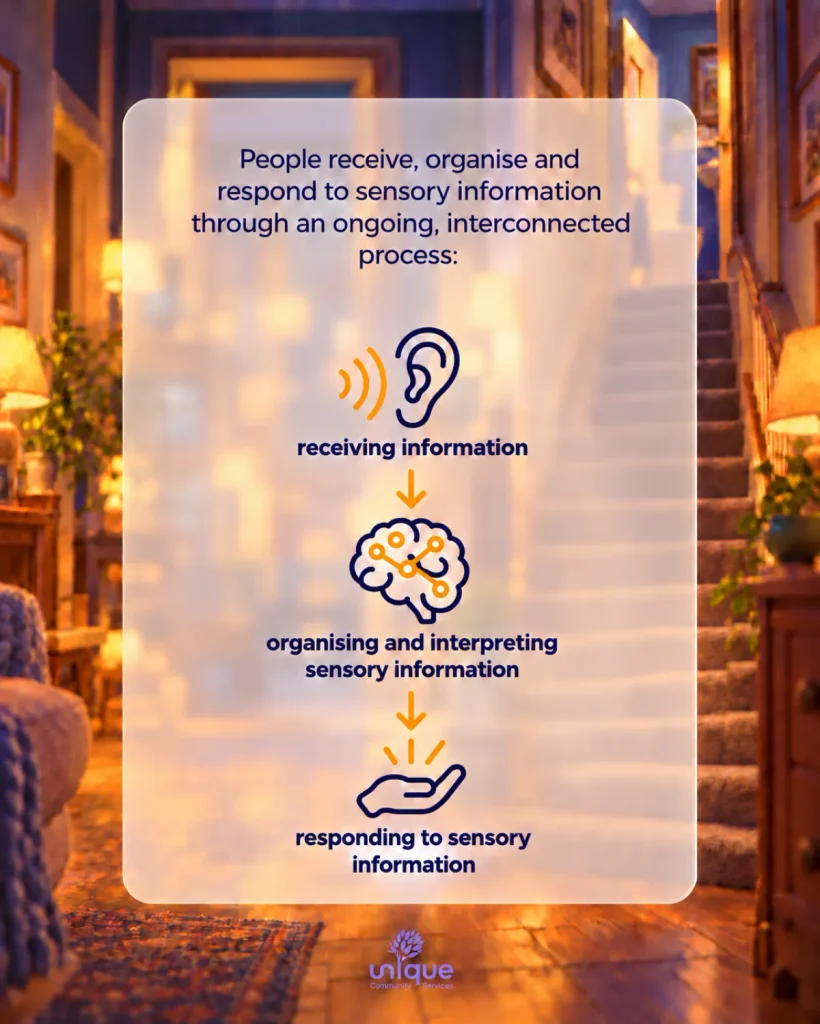
In community support, sensory needs need to be considered as part of people’s environments and activities, as they belong within wider community care planning. For autistic people specifically, the focus should be on adapting personal space, visual input, background noise and other features of the physical environment. Sensory integration in a sensory-supportive environment should reflect the person’s needs and preferences. Therefore, developing a sensory profile can help teams understand:
- what the person enjoys and what feels uncomfortable or overwhelming;
- which environments, activities and times of the day affect their experience;
- how they communicate comfort, discomfort, and the need for a break;
- what helps them feel settled and participate; and
- which adjustments they want others to make.
This way, sensory assessments become personalised, recovery-oriented, and trauma-informed, supporting people’s health and social life.
Sensory Differences Are Individual, Not Diagnostic Assumptions
A diagnosis may indicate that sensory needs are worth exploring, but it cannot tell a support team exactly what a person experiences or which adjustments will help. People may experience sensory information more intensely, less intensely or differently from one another. Sensory experiences can also change with fatigue, stress, anxiety, physical health and the environment.
Often sensory processing difficulties/differences are associated with autism and ADHD. Besides autistic people and people with ADHD, people with a learning disability may also experience sensory processing differences, alongside communication difficulties, physical health needs or sensory impairments. Acquired brain injury can change someone’s sensory experience, including how they manage environments that previously felt comfortable. Also, neurological conditions and trauma histories can influence how sensory experiences are interpreted and responded to. People with other complex needs may experience several interacting influences on their sensory responses. A person may have a neurological condition, communication needs and a trauma history together. Assessment should explore those interactions rather than attribute every response to one diagnosis.
Why the Environment Matters?
The environment influences how a person feels, communicates and participates in everyday life. And daily tasks in one household can become challenging due to vestibular, tactile, or gustatory sensitivities. Lighting, noise, smells, textures, personal space and the predictability of activities can either support someone’s sensory needs or make daily experiences uncomfortable and overwhelming. A sensory-supportive environment considers both the physical surroundings and how support is delivered.
Behaviours as Communication
Behaviour can provide information about a person’s comfort, distress and unmet needs, and may be a sign of sensory discomfort or unmet sensory needs, particularly when communicating through speech is difficult. Understanding the circumstances surrounding a behaviour is therefore essential before deciding how to respond. For example, covering the ears, leaving a room or moving away from touch may indicate that an experience has become uncomfortable. These responses should prompt exploration of what the person is experiencing, as some sensations may be hard for the person to handle in that context. They do not, by themselves, establish the cause.
Communication itself may become harder during sensory overload. A person who usually explains their needs verbally may need another way to communicate when overwhelmed. Community teams respond by reducing environmental demands and making the person’s preferred communication methods available.
Read more about Why Behaviour Support Starts with Listening.
Independence and Control
Having control over sensory experiences can help people take a more active role in their everyday lives. An adult’s or a child’s sensory needs must be set up in a way that promotes autonomy, participation in decisions, and self-management. Sensory planning should help identify the person’s needs and preferences while keeping them involved in choices such as room lighting, when to listen to music, comfortable clothing, or where to take a break.
These adjustments can make participation more manageable. For example, someone might choose a quieter time to visit a shop or agree to a shorter visit with an opportunity to leave when needed. Therefore, sensory planning keeps the person involved in deciding what they want to do and how support can help them do it, while supporting problem solving when activities or environments become difficult.
Smooth Transitions
Transitions can involve changes in sensory input, routines, relationships and expectations. Moving between activities or places, and larger changes such as leaving hospital or moving home, may introduce unfamiliar experiences. When support teams get involved from day one, they have time to get to know the person, learn what makes them feel comfortable and safe, what doesn’t work, and prepare them for what will happen. Whether through social or video stories showing the movement, or visual boards showing the house, the adaptations and the expectations of the environment, they can ensure smoother transitions across settings. Therefore, planning may include:
- Offering visits, photographs or accessible information about a new place.
- Exploring its lighting, sounds, smells and shared spaces before the move.
- Explaining who will provide support and what routines may change.
- Keeping familiar possessions and helpful sensory resources available.
- Sharing the person’s preferences, early signs of distress and agreed support strategies.
- Allowing time to adjust and reviewing the plan with the person.
When care teams focus on predictability and preparation, rather than a fixed transition programme, the approach will always reflect people’s wishes, needs and pace.
Sensory Overload and Sensory Under-Responsiveness
Sensory overload describes becoming overwhelmed by sensory information and finding it difficult to process further input. It may arise from several competing sensations or one particularly intense experience, including difficulty concentrating, reduced communication, withdrawal, crying, shouting or trying to get away. Sounds, bright lights, texture, touch on the skin, or crowded and hot places may feel intensely uncomfortable for someone who is over-responsive. During overload, support should reduce the demands the person is struggling with. Less conversation, short and direct language, and time to prepare for or recover from stressful experiences might be an important approach at this stage.
On the other hand, sensory under-responsiveness means that sensory information may be noticed less readily or, as a result, produce a reduced response. Someone who is sensory under-responsive may not notice pain or temperature changes readily, may appear less aware of their surroundings, or may seek stronger input through pressure, movement or noise.
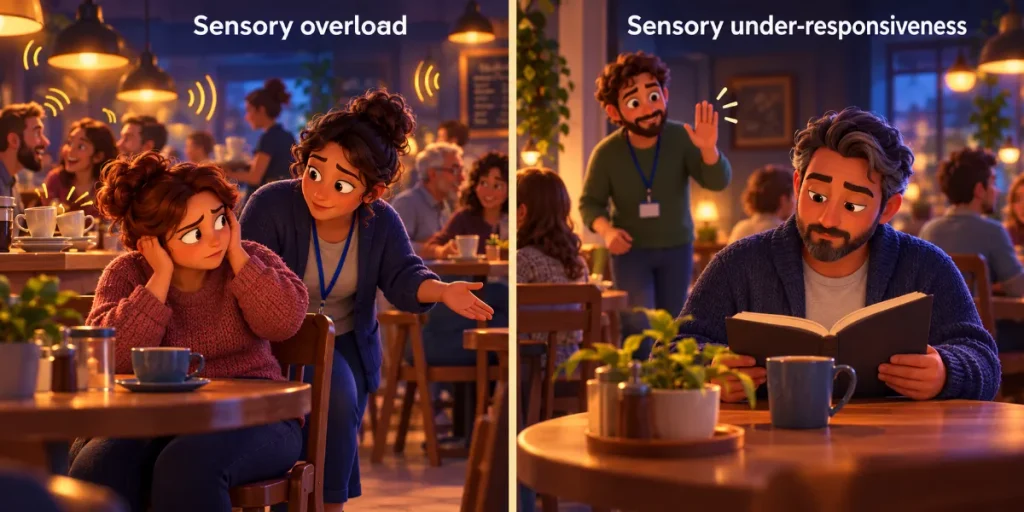
Under-responsiveness and sensory seeking are related but distinct descriptions. The first concerns reduced noticing or responding, while the second concerns actively obtaining sensory input. Someone may seek input through rocking, touching objects or making repetitive sounds, but the meaning of these actions needs to be understood individually.
Unmet Sensory Needs Can be Mistaken for Behaviours of Concern
When sensory needs are overlooked, responses to discomfort or attempts to regulate can be misunderstood. Someone leaving an overwhelming room may be described as refusing to participate. Repeated movement or sounds may be treated as disruption without exploring whether they provide useful sensory input, and some movement may offer vestibular input; active proprioceptive input can also be calming for some people. These are illustrative examples of why understanding context matters. Assessment needs to consider sensory needs alongside other possible explanations. Pain, illness, anxiety, communication difficulties and changes in routine can influence someone’s responses.
For community teams, this means observing what happens before and after a response, listening to the person and those who know them well, and reviewing whether the environment or support needs to change.
The Link Between Sensory Needs, PBS and Capable Environments
Positive Behaviour Support (PBS) starts with getting to know the person, what matters to them, who they feel comfortable with and how they experience the world around them. A room may seem quiet to others, yet the background noise can be difficult for that person to bear. An uncomfortable texture or having to sit still for too long may also make an ordinary part of the day distressing. Paying attention to these experiences helps us understand what needs to change. Within PBS, this is part of building a capable environment where the person feels understood and has the support to live well.
A capable environment is a place where someone can feel comfortable, make themselves understood and spend time doing things they enjoy, with people who know how to support them. For a person with sensory processing difficulties, this means noticing how noise, lighting or activity affect them, listening to what they communicate and making changes together. They may enjoy joining in but need somewhere quiet to pause, or feel more settled when they can move around. The balance between activity, rest and preferred sensory experiences comes from getting to know the person and respecting what they need at different moments in their day.
Essential Features of a Sensory-Supportive Environment
A sensory-supportive environment starts with understanding how the person experiences the world. Each sensory system may respond differently, including the visual system, which processes information such as color and patterns, so adjustments should follow individual preferences and assessment. Sensory integration describes how sensory information is brought together for use in everyday life, and it should not be confused with prescribing a particular therapy.
Practical ideas based on sensory-friendly principles may include:
- Managing background noise: consider televisions, conversations, appliances and echo, and provide access to quieter spaces.
- Offering control over lighting: explore brightness, glare and flicker, and make preferred lighting options accessible.
- Considering smells and textures: ask about cleaning products, food, clothing, bedding and personal care materials.
- Creating predictability: explain what will happen, who will be present and when activities may change.
- Supporting regulation: make space for preferred movement, hobbies, familiar possessions and helpful tools for self-regulation.
- Providing choice and space: involve the person in adjustments and offer access to quiet or outdoor areas, including nature where this is enjoyable and accessible.
Making Sensory Needs a Core Part of Community Care
Sensory needs should inform assessment, daily support and reviews across community care services. Plans should describe the nature of the person’s sensory experiences, what supports participation and which circumstances make activities harder to cope with. Therapy teams often recommend considering sensory profiles alongside communication, health, routines and the physical environment, offering advice on profiles, adjustments and review, and recognising that sensory profiles may change.
For children, understanding a child’s sensory difficulties should include listening to their own experiences and working with those who know them well, including knowing when they may struggle to explain internal states such as feeling tired. Once this is accomplished, teams need to create sensory profiles collaboratively, using the young person’s own words wherever possible, while recognising that sensory processing includes each sense, not only external sensations. Across age groups, this supports a practical principle: professionals involve the person, share useful information between teams, and review whether adjustments help them participate in the life they want.
Get Support with Unique Community Services
At Unique Community Services, we provide personalised community support for people of all ages with multiple needs in complex situations. Our in-house therapy team includes PBS practitioners, multimedia specialists and PROACT-SCIPr-UK® Principal Instructors, and work across homes, schools, and other community settings. Through comprehensive assessment, shared decision-making and the Capable Environments model, we work to create support that reflects the person’s strengths, communication and everyday goals, using practical approaches and, where needed, technology that supports communication or everyday participation.
Whether you are exploring support for a loved one or making a professional referral, we welcome a conversation about what matters to the person and where support is needed.
Our services also include transitional support, bringing families, therapy and clinical teams, support workers and commissioners together to plan moves from hospital into community living.
Contact us today to discuss the support available. We deliver our services across the UK.
Offices: Manchester and Leeds
